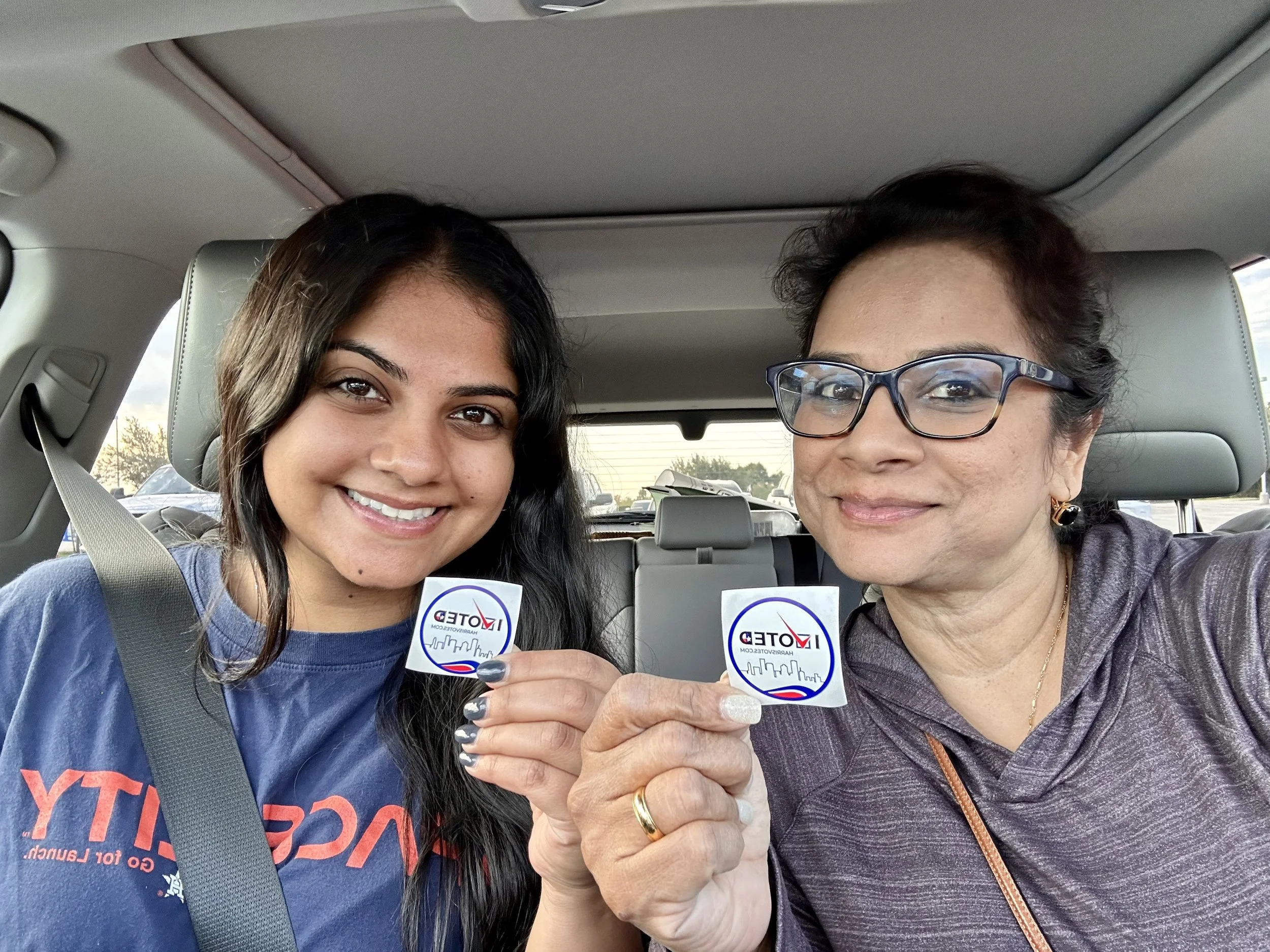
Navigating Primary Elections: party platforms. Tips for South Asian Voters in March 2024

Shashi Bhatia – Business analyst at a Big Four accounting organization. Over 9 years of IT experience as a BA and QA Analyst for different projects in ecommerce, Retail, Healthcare, Financial/Banking, Credit Card Processing, and Tax domain. Extensive system design and project management experience, combined with expertise in providing consumers and users with necessary information and tools. Excellent understanding of the Software Development Life Cycle (SDLC), Software Test Life Cycle (STLC), Agile, and Waterfall along with strong requirement gathering and documentation skills. Exposure to Configuration and Customization of the SAP Application with a focus on General Ledger (GL), Accounts Receivables (AR), Accounts Payable (AP), and Controlling (CO) modules in a technical classroom environment. Well rounded attitude for learning/mastering new concepts, assisting co-workers, and making every effort to be a team player. Dedicated voting rights volunteer with the South Asian community in Texas
Kavita Khandekar Chopra - Officer. Kavita Khandekar Chopra (she/her) is the Managing Director, Strategy & Engagement for re:power - a national training organization building power with and for Black, Indigenous and People of Color organizers across the country. In her role at re:power, Kavita oversees Development, Communications, and Strategic Initiatives for the organization. With fifteen years of experience in the non-profit sector, Kavita has expertise in fundraising, communications, operations and finance for both 501c3 and 501c4 organizations. Kavita earned her Bachelor’s of Arts in Social Welfare from UC Berkeley and her Masters of Science in Social Work from UT Austin, concentrating in Community and Administrative Leadership. She is passionate about developing responsive systems built with equity at the center and building BIPOC community power in Texas. Kavita is the child of Indian immigrants, and a Mother of two.
Namrata Sharma - Technology leader with expertise in Semiconductors and Telecom technologies. Has worked for some of the marquee names in tech, proven ability to incubate new businesses. A frequently requested speaker at industry events on topics like leadership, innovation and technology trends. M.S in Computer Science and B.Tech in Electronics Engineering. Strong advocate of gender parity, actively engaged in creating awareness to promote gender diversity in the workplace and beyond. Engaged with SAAVETX since 2017 in various efforts including leading rallies and hosting events for voter empowerment. Active in voter engagement in Collin County, Texas, key organizer for Rally against Racism in August 2022.
Krisan Patterson Swaminathan - Board Chair. Former attorney. Assisted in the defense of campaign finance reform legislation before the U.S. District Court and U.S. Supreme Court on behalf of Senators McCain, Feingold, et al. Experience with domestic violence, immigration, community organizing, and work with marginalized communities. Founding Chair of the Board of SAFE DC, Inc., a leading D.C. nonprofit addressing the needs of domestic violence survivors and their children. Former Court Appointed Special Advocate on behalf of foster children in New Jersey, March to the Polls volunteer high school educator, and Election Protection volunteer.
School boards have a significant impact on South Asians as they make decisions that affect the education and opportunities available to South Asian students. Here are some reasons why voting for school board elections is important:
Representation: School boards should reflect the diverse communities they serve, including South Asians. By voting for candidates who understand and value the needs and perspectives of South Asian families, we can ensure that our voices are heard and our interests are represented.
Educational Equity: School boards make decisions about funding, curriculum, and resources that can either promote or hinder educational equity for South Asian students. By voting for candidates who prioritize equity and access for all students, including those from underrepresented communities, we can work to close the achievement gap and ensure that South Asian students have the same opportunities as their peers.
Language Access: Many South Asian families speak languages other than English at home, and school boards can make decisions about language access and support for English Language Learners (ELLs). By voting for candidates who prioritize language access and support for ELLs, we can ensure that South Asian students who are still learning English have the resources and support they need to succeed in school.
Cultural Competence: School boards can promote cultural competence among educators and staff, which is critical for supporting South Asian students and families. By voting for candidates who understand and respect the cultural diversity of South Asian communities, we can work to create a school environment that is welcoming and inclusive for all students.
In summary, school boards have a significant impact on South Asians and their education. By voting in school board elections, we can ensure that our voices are heard and our interests are represented, and work to promote educational equity, language access, and cultural competence in our schools.
If you get a chance visit your mayoral candidate’s open houses or community events. Mayors can have an impact on South Asians, who are a diverse group of people with different cultural backgrounds originating from countries such as India, Pakistan, Bangladesh, Sri Lanka, Nepal, and Bhutan, among others. Here are a few ways mayors can impact South Asians:
Representation: Mayors can help ensure that South Asians are represented in local government and have a voice in decision-making processes. This can include appointing South Asians to city commissions, boards, and advisory committees.
Community engagement: Mayors can engage with South Asian communities through town hall meetings, community events, and outreach programs to better understand their needs and concerns. This can help foster stronger relationships between South Asians and the city government.
Economic development: Mayors can support economic development initiatives that benefit South Asian businesses and entrepreneurs, such as providing resources for small business development, promoting tourism, and investing in infrastructure improvements.
Social services: Mayors can work to ensure that South Asians have access to social services, such as healthcare, education, and affordable housing. They can also support initiatives to address issues like poverty, homelessness, and discrimination.
Overall, mayors can have a significant impact on the lives of South Asians by promoting inclusivity, engaging with their communities, and supporting initiatives that promote equity and justice
We, as South Asians, stand on the shoulders of the civil rights movement and the brave individuals who fought for the right to vote. South Asians were not able to fully participate in the democratic process in the United States until the passage of the Voting Rights Act of 1965 and the journey to that point was a long and difficult one.
Looking back, we see that in the early 1900s, many South Asians were denied citizenship, effectively stripping them of their right to vote. In 1940, the Nationality Act granted South Asians citizenship, but even as citizens, they faced discrimination and barriers to voting.

Dr. Martin Luther King Jr. acknowledges the crowd at the Lincoln Memorial gathered for his ‘I Have a Dream’ speech during the March on Washington, D.C. Aug. 28, 1963. (The Associated Press)
Despite these challenges, South Asians have always been an important and active part of the civil rights movement. Mahatma Gandhi's philosophy of non-violence and civil disobedience inspired leaders like Dr. Martin Luther King, Jr. and played a crucial role in the fight for voting rights.
Voting is a fundamental aspect of our democracy. As we celebrate Dr. Martin Luther King, Jr. Day, we must remember the debt of gratitude we owe to the freedom fighters who opened the doors of opportunity for us. It is because of their sacrifices and struggles that we have the right to vote. But, sadly, our work is not done. Not only must each and every one of us to continue the fight for social justice, equality, and the right to vote, but we must also take seriously our duty as citizens to exercise our rights and make our voices heard.
Unfortunately, in some states like Texas, new laws continue to be introduced that turn the clock back and make it harder for immigrants, including South Asians, to vote. This is unacceptable and goes against the principles of democracy.

Attendees listen to speakers at the Rally Against Hate in Plano on August 27, 2022.
I am proud to lead SAAVETX Education Fund and be a part of the current fight for the right to vote. One way that South Asian organizations like us have stood up for voting rights and acted as allies with other communities of color is by hosting events like The Unity March and Rally Against Hate that took place last year. It is moments like these that provide an opportunity for people to come together and show their support for civil rights and social justice.
It is more important than ever that the South Asian community stand up for our rights and the rights of others. By working together and supporting one another, we can create a more inclusive and just society for all.
As South Asians, we have a unique opportunity to shape the future of our community and our country. Let us honor the legacy of those who fought for our right to vote by registering and casting our ballots in every election. Together, we can create the future that Dr. Martin Luther King, Jr. envisioned when he proclaimed: “I have a dream that one day this nation will rise up and live out the true meaning of its creed: 'We hold these truths to be self-evident, that all men are created equal.“
Chanda Parbhoo
Executive Director
SAAVETX Education Fund
Hear about why it’s important think about women’s rights.
Please note that some counties may not update their election day voting information until right before Election Day! Check back to find the most up-to-date information available.
Click on Your County Name
Other Counties - If your county of residence is not listed above, click on this link to be directed to your local polling locations and times.
You have rights, and it’s important to know what they are. You can find the full list here.
your name does not appear on the list of registered voters
you do not meet the voter ID requirements and cannot sign the Reasonable Impediment Declaration
If you need to cast a provisional ballot, the election judge will provide you details about how to cure the provisional status of your ballot and the time frame in which it must be done.
If you have questions or need help voting, call
Bilingual assistance is available in English, Mandarin, Cantonese, Korean, Vietnamese, Tagalog, Urdu, Hindi, and Bengali.
There are several reasons you may want to call the hotline, such as:
You have questions about voting that you cannot find the answers to.
You were denied the right to vote.
You witnessed illegal or questionable electioneering behavior.
You experienced unusual delays or voting discrimination.
You witnessed voter intimidation.
You have been wrongly purged from the voter registration rolls.
© 2023 SAAVETX EF
ALL RIGHTS RESERVED
SAAVETX EF is a fiscally sponsored project of NEO Philanthropy, a 501(c)(3) non-profit organization. SAAVETX EF strengthens the voter engagement infrastructure in Texas by expanding our political consciousness by educating and empowering our electorate.


