
In the 2023 Houston elections, South Asians have a unique opportunity to shape the future of the city, as this election will determine Houston's next mayor.

School boards have a significant impact on South Asians as they make decisions that affect the education and opportunities available to South Asian students. Here are some reasons why voting for school board elections is important:
Representation: School boards should reflect the diverse communities they serve, including South Asians. By voting for candidates who understand and value the needs and perspectives of South Asian families, we can ensure that our voices are heard and our interests are represented.
Educational Equity: School boards make decisions about funding, curriculum, and resources that can either promote or hinder educational equity for South Asian students. By voting for candidates who prioritize equity and access for all students, including those from underrepresented communities, we can work to close the achievement gap and ensure that South Asian students have the same opportunities as their peers.
Language Access: Many South Asian families speak languages other than English at home, and school boards can make decisions about language access and support for English Language Learners (ELLs). By voting for candidates who prioritize language access and support for ELLs, we can ensure that South Asian students who are still learning English have the resources and support they need to succeed in school.
Cultural Competence: School boards can promote cultural competence among educators and staff, which is critical for supporting South Asian students and families. By voting for candidates who understand and respect the cultural diversity of South Asian communities, we can work to create a school environment that is welcoming and inclusive for all students.
In summary, school boards have a significant impact on South Asians and their education. By voting in school board elections, we can ensure that our voices are heard and our interests are represented, and work to promote educational equity, language access, and cultural competence in our schools.
be 65 years or older;
be sick or disabled;
be out of the county on election day and during the period for early voting by personal appearance; or
be expected to give birth within three weeks before or after Election Day; or
be confined in jail, but otherwise eligible.
Print (PDF) the ABBM form
OR submit an order online and an ABBM will be mailed to you.
Complete Sections 1 through 4.
Sign and Date Section 5.
If you were unable to sign the application and someone witnessed your signature, that person must complete Section 6.
If someone helped you complete the application or mailed the application for you, that person must complete Section 6.
Affix postage.
If you printed the application you must place it in your own envelope and add postage.
If you ordered the application online and it was mailed to you - fold the application in half, moisten top tab, seal and add postage.
Address and mail the completed ABBM to the Early Voting Clerk in your county. You may also fax the application if a fax machine is available in the early voting clerk’s office. You also have the option of submitting a scanned copy of the completed and signed application to the Early Voting Clerk via email. If an ABBM is faxed or emailed, then the original, hard copy of the application MUST be mailed and received by the early voting clerk no later than the 4th business day.
The Early Voting Clerk is the County Clerk or Elections Administrator for your county
Contact information, including mailing addresses, fax numbers if available, and email addresses for the Early Voting Clerks are available on this website.
NOTICE: Do not mail, fax, or email completed applications for Ballot by Mail to the Secretary of State Office. To ensure timely receipt, please send your completed application for a Ballot by Mail to your county’s early voting clerk.
Track My Ballot
Military and overseas voters are welcome to use the regular registration and early voting by mail process available to all voters away from their home county on Election Day. However, there are also special provisions for military and overseas voters.
For more information, please read the Early Voting in Texas pamphlet
Source Texas Secretary of State
If you get a chance visit your mayoral candidate’s open houses or community events. Mayors can have an impact on South Asians, who are a diverse group of people with different cultural backgrounds originating from countries such as India, Pakistan, Bangladesh, Sri Lanka, Nepal, and Bhutan, among others. Here are a few ways mayors can impact South Asians:
Representation: Mayors can help ensure that South Asians are represented in local government and have a voice in decision-making processes. This can include appointing South Asians to city commissions, boards, and advisory committees.
Community engagement: Mayors can engage with South Asian communities through town hall meetings, community events, and outreach programs to better understand their needs and concerns. This can help foster stronger relationships between South Asians and the city government.
Economic development: Mayors can support economic development initiatives that benefit South Asian businesses and entrepreneurs, such as providing resources for small business development, promoting tourism, and investing in infrastructure improvements.
Social services: Mayors can work to ensure that South Asians have access to social services, such as healthcare, education, and affordable housing. They can also support initiatives to address issues like poverty, homelessness, and discrimination.
Overall, mayors can have a significant impact on the lives of South Asians by promoting inclusivity, engaging with their communities, and supporting initiatives that promote equity and justice
We, as South Asians, stand on the shoulders of the civil rights movement and the brave individuals who fought for the right to vote. South Asians were not able to fully participate in the democratic process in the United States until the passage of the Voting Rights Act of 1965 and the journey to that point was a long and difficult one.
Looking back, we see that in the early 1900s, many South Asians were denied citizenship, effectively stripping them of their right to vote. In 1940, the Nationality Act granted South Asians citizenship, but even as citizens, they faced discrimination and barriers to voting.
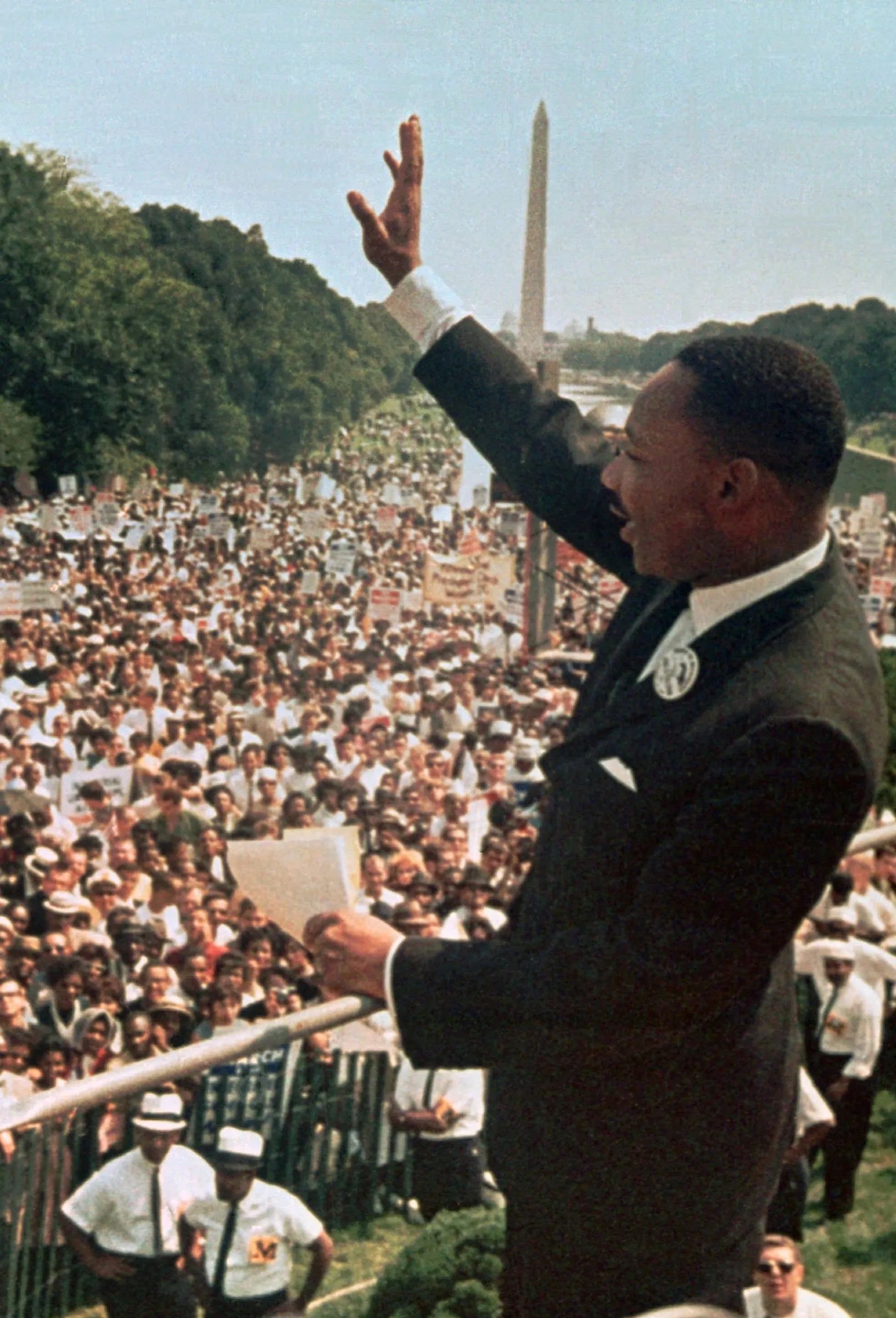
Dr. Martin Luther King Jr. acknowledges the crowd at the Lincoln Memorial gathered for his ‘I Have a Dream’ speech during the March on Washington, D.C. Aug. 28, 1963. (The Associated Press)
Despite these challenges, South Asians have always been an important and active part of the civil rights movement. Mahatma Gandhi's philosophy of non-violence and civil disobedience inspired leaders like Dr. Martin Luther King, Jr. and played a crucial role in the fight for voting rights.
Voting is a fundamental aspect of our democracy. As we celebrate Dr. Martin Luther King, Jr. Day, we must remember the debt of gratitude we owe to the freedom fighters who opened the doors of opportunity for us. It is because of their sacrifices and struggles that we have the right to vote. But, sadly, our work is not done. Not only must each and every one of us to continue the fight for social justice, equality, and the right to vote, but we must also take seriously our duty as citizens to exercise our rights and make our voices heard.
Unfortunately, in some states like Texas, new laws continue to be introduced that turn the clock back and make it harder for immigrants, including South Asians, to vote. This is unacceptable and goes against the principles of democracy.

Attendees listen to speakers at the Rally Against Hate in Plano on August 27, 2022.
I am proud to lead SAAVETX Education Fund and be a part of the current fight for the right to vote. One way that South Asian organizations like us have stood up for voting rights and acted as allies with other communities of color is by hosting events like The Unity March and Rally Against Hate that took place last year. It is moments like these that provide an opportunity for people to come together and show their support for civil rights and social justice.
It is more important than ever that the South Asian community stand up for our rights and the rights of others. By working together and supporting one another, we can create a more inclusive and just society for all.
As South Asians, we have a unique opportunity to shape the future of our community and our country. Let us honor the legacy of those who fought for our right to vote by registering and casting our ballots in every election. Together, we can create the future that Dr. Martin Luther King, Jr. envisioned when he proclaimed: “I have a dream that one day this nation will rise up and live out the true meaning of its creed: 'We hold these truths to be self-evident, that all men are created equal.“
Chanda Parbhoo
Executive Director
SAAVETX Education Fund
Hear about why it’s important think about women’s rights.
Please note that some counties may not update their election day voting information until right before Election Day! Check back to find the most up-to-date information available.
Click on Your County Name
Other Counties - If your county of residence is not listed above, click on this link to be directed to your local polling locations and times.
You have rights, and it’s important to know what they are. You can find the full list here.
your name does not appear on the list of registered voters
you do not meet the voter ID requirements and cannot sign the Reasonable Impediment Declaration
If you need to cast a provisional ballot, the election judge will provide you details about how to cure the provisional status of your ballot and the time frame in which it must be done.
If you have questions or need help voting, call
Bilingual assistance is available in English, Mandarin, Cantonese, Korean, Vietnamese, Tagalog, Urdu, Hindi, and Bengali.
There are several reasons you may want to call the hotline, such as:
You have questions about voting that you cannot find the answers to.
You were denied the right to vote.
You witnessed illegal or questionable electioneering behavior.
You experienced unusual delays or voting discrimination.
You witnessed voter intimidation.
You have been wrongly purged from the voter registration rolls.
Click on Your County Name
Other Counties - If your county of residence is not listed above, click on this link to be directed to your local polling locations and times.
There are a number of offices that are elected in Texas. Find out more about what the majority of the offices do and the issues they impact.
GOVERNOR: The governor is the chief executive of the state. Outlines budget recommendations for the Legislature and leads the state and its military forces during emergencies. Signs or vetoes bills. Can call special sessions for lawmakers. Makes appointments to hundreds of government entities.
LIEUTENANT GOVERNOR: The lieutenant governor, the second-highest state executive, presides over the state Senate. Often regarded as the most powerful statewide elected office because the lieutenant governor is in charge of the legislative agenda and standing committees.
ATTORNEY GENERAL: The state’s top attorney. The office is responsible for representing the state in legal matters, primarily in civil litigation.
COMPTROLLER OF PUBLIC ACCOUNTS: The state’s accountant and chief financial officer. Responsible for collecting state fees and taxes. Manages hundreds of state contracts on behalf of other agencies and provides forecasts on the state’s revenue and economy for the Legislature.
COMMISSIONER OF THE GENERAL LAND OFFICE: Manages 13 million acres of state land. Administers federal aid after natural disasters, manages the Alamo and oversees investments from the Permanent School Fund to help fund public education. Also provides support for veterans through the Veterans Land Board.
COMMISSIONER OF AGRICULTURE: Supports farmers and regulates the agriculture industry. Administers school lunch programs and other programs to help address hunger and promote nutrition.
RAILROAD COMMISSIONER: Regulates oil, gas, coal and pipelines in the state. Oversees gas utility services and rates, as well as coal and uranium mining in the state.
JUSTICE, SUPREME COURT: The Supreme Court of Texas is the court of last resort for civil matters in the state.
JUDGE, COURT OF CRIMINAL APPEALS: The Court of Criminal Appeals is Texas's highest court for criminal cases.
MEMBER, STATE BOARD OF EDUCATION: Sets curriculum standards. Reviews and adopts instructional materials. Establishes graduation requirements.
STATE SENATOR: The Texas Senate is one of two parts, or chambers, of the Texas State Legislature. Together with the Texas House of Representatives, it makes laws and approves the state budget.
STATE REPRESENTATIVE: The Texas House of Representatives is the other chamber of the Texas State Legislature. Together with the Texas Senate, it makes laws and approves the state budget.
COUNTY JUDGE: Serves as chief executive officer of the county and is involved in almost all aspects of county government, including preparing the County budget and presiding over Commissioners Court. Head of emergency management.
To cast your vote by mail and avoid rejection, it’s important that you follow the directions provided with your ballot carefully.

Mark your ballot with a black or blue pen and fill in the ovals completely.
There is a space for you to provide your phone number and email address. Please fill this out. This is how the election office will contact you if there is a problem with your ballot.
There will be two envelopes in addition to your ballot and instructions - the first is the Ballot Envelope for your ballot, the second is the Carrier Envelope.
Put your sealed Ballot Envelope inside the Carrier Envelope and BEFORE sealing the Carrier Envelope, provide BOTH your Texas Driver’s License number and last 4 digits of your Social Security number on the Carrier Envelope. Write down your contact information on the Carrier Envelope. Now, seal the Carrier Envelope twice.
After you seal the Carrier Envelope the second time, you must sign the Carrier Envelope. Your signature should go OVER the flap after you seal it. Make sure your signature matches how you signed your name on your mail-in ballot application.

If someone helps you with your mail-in ballot, you must put your helper’s name and address on the Carrier Envelope, which is the one used to return your ballot to the early voting clerk. Your helper must also sign the Carrier Envelope. If you were unable to sign and want to provide information about a witness, fill that section in.**If you need help reading, marking, or mailing the actual ballot, ask a trusted relative or friend for help. It’s not uncommon for someone from a political organization to offer to help with your ballot soon after you’ve received it. We recommend you decline this kind of help for several reasons. If you allow your ballot to be mailed by someone you don’t know, it might not be mailed at all. If it’s delivered to the elections office by a common or contract carrier from the address of a candidate or a campaign’s headquarters, your ballot will be rejected.
Mail in your mail-in ballot as soon as you fill it out. The quicker the election office receives it, the sooner any mistakes can be corrected. A completed mail-in ballot MUST be returned to your county elections office in the Official Carrier Envelope provided to you. It may be returned in any of the following manners:

Regular residential mail via USPS
Ballot must be postmarked by 7:00 pm on Election Day and must be received by 5:00 p.m. on the first mail delivery day after Election Day
In-person drop off at your local county elections office on Election Day
You must present an acceptable form of photo ID
Only the voter may deliver their ballot in person
Common or contract carrier (such as personal courier, or FedEx or UPS, or other contracted mail service)
Ballot must be received by 7:00 pm on Election Day
If the carrier provides receipt mark indicating a time before 7:00 pm on Election Day, it may be received by 5:00 pm on the first mail delivery day after Election Day.
If you want to track you mail-in ballot, you can do so here.
If you change your mind and want to vote in person instead, simply take your ballot to your polling place during early voting or on Election Day. If you can’t find your ballot, cast a provisional ballot.
If you are told that your mail-in ballot was rejected, you have until the 6th day after Election Day to cure it.
To avoid any issues with casting your ballot by mail, here are some helpful instructions to get you through the process.
STEP 1: Determine if you are eligible to vote by mail.
To be eligible to vote by mail in Texas, you must:
be 65 years or older;
be sick or disabled;
be out of the county on election day and during the period for early voting;
be expected to give birth within three weeks before or after Election Day; or
be confined in jail, but otherwise eligible.
STEP 2: Request your mail-in ballot by visiting https://saavetxeducationfund.org/request-mail-in-ballot-application
STEP 3: Once you receive your application, make sure to read it carefully and fill out the required information.
Here’s a handy graphic that show some of the most often missed parts of the application.

Section 1:
Use your home address where you registered to vote.
IMPORTANT! Include BOTH your driver’s license number and the last 4 digits of your social security number.
Section 2: If you will be outside of the county during voting time for any reason including being away at college, select “other address” and fill in where you can receive your mail-in ballot (dorm, apartment, etc.). Make sure to also check the box that says “Address Outside the County”
Section 3: Mark your reason for voting by mail. If you are a college student, mark “Expected Absence from the County” and fill in the dates for the start and end of the fall semester.
Section 4: Make sure you select “November Election”.
Section 5: Sign and date. Take a picture of your signature so you can sign it the same way on your mail-in ballot.
To be safe, mail in your application. Use your own envelope and postage. Mail it to your county’s early voting clerk in time for it to be received by October 28, 2022. Find the address here.
You can track your request and your mail-in ballot here.
There are special provisions for military and overseas voters. You can read more here.
Once you’ve received your mail-in ballot, you can find instructions on how to submit it properly here.
Curbside voting is available at all polling locations during Early Voting and on Election Day. It is a good idea but not required to call your county elections office in advance to confirm your intention to use this facility.
You can find the addresses and phone numbers for all 254 counties in Texas by going to https://bit.ly/TXCtyRegistrars. To find their website, Google “[your county name] website” to find more information.
This service is reserved for those who are “physically unable to enter the polling place,” typically the mobility-impaired and/or elderly. In addition, if you are ill (meaning ill with something other than COVID-19; if you are exhibiting symptoms of COVID-19, contact your County Elections office to check if you are eligible for curbside voting and still wish to vote, you may do so with curbside voting.
You have rights, and it’s important to know what they are. You can find the full list here: https://www.votetexas.gov/your-rights/
your name does not appear on the list of registered voters
you do not meet the voter ID requirements and cannot sign the Reasonable Impediment Declaration
If you need to cast a provisional ballot, the election judge will provide you details about how to cure the provisional status of your ballot and the time frame in which that must be done.
In case you have concerns you may call Texas Democratic Party Voter Information and Protection Hotline at 1-844-898-6837.
Have questions or need help voting? Call
Bilingual assistance is available in English, Mandarin, Cantonese, Korean, Vietnamese, Tagalog, Urdu, Hindi, and Bengali.
There are several reasons you may want to call the hotline,for instance:
You have questions about voting that you cannot find the answers to.
You have been denied the right to vote.
You have witnessed illegal or questionable electioneering behavior.
You have experienced unusual delays or voting discrimination.
There is voter intimidation occurring .
You have been wrongly purged from the voter registration rolls .
Must be received by your county election office by February 18th
Must be received by County Elections office (https://bit.ly/TXCtyRegistrars) by Tuesday, March 1st at 7:00 pm
© 2023 SAAVETX EF
ALL RIGHTS RESERVED
SAAVETX EF is a fiscally sponsored project of NEO Philanthropy, a 501(c)(3) non-profit organization. SAAVETX EF strengthens the voter engagement infrastructure in Texas by expanding our political consciousness by educating and empowering our electorate.


